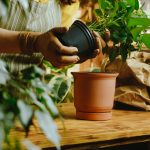
Container gardening is one of the most accessible, most versatile, and most creatively rewarding forms of gardening available to anyone who wants to grow plants — regardless of whether they have a sprawling country garden, a small urban patio, a narrow balcony, a sunny windowsill, or simply a doorstep with enough light to support a pot of herbs. The fundamental concept of container gardening is elegantly simple: instead of growing plants directly in the ground, they are grown in portable containers — pots, planters, troughs, window boxes, hanging baskets, raised beds, and the full range of vessels whose contained growing medium provides the plants within them with everything they need to grow, flower, and produce. Yet within this simple concept lies an extraordinary breadth of possibility — from the miniature alpine garden in a stone trough and the towering statement planting of a large terracotta pot beside a front door, through the productive kitchen garden of herbs and salad leaves in a window box and the spectacular summer bedding display of a hanging basket overflowing with colour, to the ambitious container kitchen garden of tomatoes, peppers, and courgettes on a sunny patio whose productivity rivals many in-ground plots in the hands of a skilled container grower. Container gardening is not a compromise version of real gardening for those without the space for a proper garden — it is a legitimate and distinctive gardening discipline with its own specific techniques, its own particular rewards, and its own unique advantages over in-ground growing that experienced gardeners with access to all the ground they could want still choose to exploit for specific plants, specific situations, and specific aesthetic effects. This guide provides the complete introduction to container gardening that any aspiring container grower needs to begin their journey with confidence, practical knowledge, and genuine excitement about the possibilities that this most accessible and most immediate of all gardening forms opens up.
The Advantages of Container Gardening: Why Pots and Planters Offer Unique Benefits
Container gardening offers a set of genuine and distinctive advantages over in-ground growing that explain both its popularity among gardeners of all experience levels and its specific value for situations and plants where the in-ground alternative is either unavailable or less suitable. Understanding these advantages provides both the motivation for embracing container growing and the intellectual framework for deploying it most effectively — using containers where they offer genuine advantages rather than treating them as a reluctant substitute for the in-ground growing that is not available.
Portability is the most immediately obvious and most operationally useful advantage of container growing — the ability to move plants to the positions of greatest sunlight, greatest shelter, or greatest visual impact as conditions, seasons, and design intentions change throughout the year. A tender plant that thrives outdoors in summer but requires frost protection in winter can be moved indoors at the first sign of cold weather without the disruption of lifting and replanting. A container planted for spring display can be moved to a less prominent position once its season is over and replaced with a summer container whose peak display period follows seamlessly. A feature planting that works perfectly as a focal point in one part of the garden can be repositioned to serve a different design purpose in another area without any of the upheaval that moving in-ground planting requires. This flexibility is particularly valuable in small gardens and paved outdoor spaces whose limited area means that every planting decision needs to deliver maximum impact across the full growing season, and where the ability to rotate containers and refresh displays as different plants reach their peak provides the seasonal dynamism that a fixed in-ground planting scheme cannot easily replicate.
Soil control is the second major advantage of container growing — the ability to provide the specific growing medium that each plant requires regardless of the soil conditions available in the ground. The gardener whose ground is heavy clay, whose soil is strongly alkaline, or whose garden sits on shallow chalk over which barely thirty centimetres of soil exists can grow acid-loving plants including rhododendrons, camellias, and blueberries in containers filled with ericaceous compost without any need to address the fundamental soil chemistry of the garden. The gardener who wants to grow alpines requiring the excellent drainage that their natural mountain habitat provides can create the perfect free-draining growing medium in a container whose composition bears no relationship to the surrounding garden soil. The vegetable gardener who wants the fertility, the disease-free status, and the specific texture of a purpose-composed growing medium rather than the variable quality of whatever soil the garden provides can create exactly that in a container or raised bed whose controlled environment optimises growing conditions for productive crops. This soil control advantage makes container gardening the most practical approach for a remarkably wide range of plants and purposes across virtually every garden situation.
Choosing the Right Containers: Materials, Sizes, and Drainage Essentials
The container in which any plant is grown is as important to its success as the compost it grows in or the watering regime it receives — a vessel whose material, size, drainage provision, and aesthetic character collectively determine both the horticultural suitability of the growing environment and the visual contribution of the container to the overall design of the planting scheme or garden space. The range of container materials and styles available to contemporary container gardeners is wider and more varied than at any previous point in gardening history — traditional terracotta and ceramic alongside modern lightweight resin and fibreglass, galvanised metal and recycled timber, woven willow and wicker, recycled tyres and vintage colanders — each with their own specific horticultural characteristics, aesthetic qualities, and practical advantages and limitations.
Terracotta is the classic and most beloved container material of traditional garden culture — its warm, earthy colour and texture provide the visual character that complements virtually every planting style from the most formal to the most naturalistic, and its porous nature allows air exchange at the root zone and prevents the waterlogging that kills more container plants than any other cause. The porosity of terracotta is also its primary practical disadvantage in terms of water retention — the moisture evaporation through the pot wall significantly increases the watering requirement of terracotta-grown plants compared to those in non-porous containers, a fact that can make terracotta impractical for gardeners whose watering time is limited or whose containers are positioned where access for regular watering is inconvenient. The frost vulnerability of most standard terracotta — which can shatter when the water within the porous walls expands during freezing — restricts its year-round outdoor use to frost-resistant grades whose higher density and lower porosity provide protection against freeze-thaw damage at the cost of the enhanced root zone aeration that standard terracotta’s porosity provides. Large glazed ceramic containers combine the aesthetic warmth of ceramic with the reduced porosity and reduced frost vulnerability of the glazed finish, providing a practical and beautiful container option for permanent outdoor placements whose year-round weather exposure makes frost resistance an important selection criterion.
Adequate drainage is the single most critical functional requirement of any container — the provision of sufficient drainage holes in the base of the container to allow excess water to escape freely and prevent the waterlogged, oxygen-depleted root zone conditions that rot the roots of most container plants with a speed and a thoroughness that rarely allows recovery once established. Any container without drainage holes must have them created before use — drilled through ceramic, terracotta, and stone containers using appropriate drill bits and adequate care with both the drilling process and the personal protective equipment whose use the dust generated by drilling ceramics requires. The practice of placing a layer of crocks — broken terracotta pot fragments or coarse gravel — over the drainage holes before adding compost is a traditional recommendation whose effectiveness in preventing compost washing out of the drainage holes is genuine, but whose claimed benefit of improving drainage has been challenged by research suggesting that the layer of coarse material at the bottom of a fine-textured compost creates a perched water table effect that can actually reduce drainage rather than improving it. The most reliable drainage strategy for containers is simply to ensure that the drainage holes are adequate in number and size, that the compost used is appropriately free-draining for the plants being grown, and that the container is positioned or raised on feet in a way that allows drainage holes to remain unobstructed by the surface beneath.
Compost, Feeding, and Watering: The Foundations of Successful Container Growing
The success or failure of any container planting is determined more decisively by the quality and the consistency of the basic growing practices — the choice of appropriate compost, the regularity and adequacy of feeding, and the management of watering — than by any other single factor in the container growing equation. These three practices are interdependent and mutually influencing in their effects on container plant health: the compost quality determines the nutrient and moisture-holding characteristics of the growing medium, the feeding programme supplements the compost’s finite nutrient supply as it is depleted through plant uptake and watering, and the watering frequency and volume must be calibrated to the combination of the compost’s moisture-retention characteristics, the plant’s water requirements, the container’s drainage efficiency, and the prevailing weather conditions whose variability makes the consistent judgement of watering requirements one of the most skilled aspects of container plant management.
Compost selection is the most consequential single material choice in container gardening, and the wide range of products available under the general label of potting or container compost whose specific characteristics vary enormously in ways that are not always apparent from the packaging merits honest assessment before any significant planting is undertaken. A quality multi-purpose compost provides a good general growing medium for most ornamental container plants and annual vegetables, but its peat-based or peat-substitute composition may not be optimal for the specific requirements of every plant category — ericaceous plants including heathers, azaleas, and blueberries require the acid pH of specialist ericaceous compost, alpines and succulents require the excellent drainage of a specifically gritty, low-fertility mix, and long-term perennial and shrub plantings benefit from the greater structural stability and nutrient reserve of a loam-based John Innes compost whose weight and density also provide the ballast that prevents large containers from blowing over in exposed positions. Adding horticultural grit or perlite to standard multi-purpose compost in a ratio of approximately one part grit to three parts compost improves drainage and aeration for plants whose root systems are intolerant of prolonged moisture — a simple modification whose effect on root health and plant longevity in container growing is genuinely significant and reliably beneficial.
Feeding container plants is a non-negotiable aspect of successful container growing whose importance reflects the finite and relatively small volume of growing medium available to the plant’s root system — a volume whose initial nutrient content is depleted progressively through plant uptake and through the leaching effect of the regular watering that container plants require. Most quality composts provide adequate nutrition for the first six to eight weeks after planting, after which the regular supplementary feeding that sustains continued plant health and performance must begin. Liquid tomato feed — the high-potassium formulation whose flowering and fruiting emphasis makes it appropriate for all flowering container plants as well as for tomatoes and other fruiting crops — applied at the recommended dilution and frequency provides the potassium that promotes flowering and root development alongside the nitrogen and phosphorus whose balance is important for overall plant health. Slow-release granular fertilisers incorporated into the compost at planting or top-dressed onto the surface of existing containers provide a more passive and less time-dependent feeding approach whose effectiveness over a three to six-month release period suits the container gardener whose schedule does not permit the regularity of weekly liquid feeding.
Plant Selection and Seasonal Planting: What Grows Best in Containers
The range of plants that can be grown successfully in containers is vast enough to encompass virtually the entire cultivated plant world — from the smallest alpines and the most compact annuals through to surprisingly large shrubs, small trees, fruit trees on dwarfing rootstocks, and the full range of vegetables and herbs whose productive potential in containers surprises and delights many who discover container food growing for the first time. The question of what grows best in containers is therefore less a matter of which plants can be grown in containers — almost all can, given appropriate container sizes and growing conditions — and more a matter of which plants are most suited to the specific conditions and the specific goals of any particular container gardening situation.
Summer bedding plants — the annuals and tender perennials whose mass planting in containers, hanging baskets, and window boxes creates the most colourful and the most instantly impactful displays available in any gardening format — are the plants most widely associated with container growing in popular gardening culture, and the combination of their generous flowering, their tolerance of the regular watering and feeding that container growing requires, and the extraordinary range of species, colours, and forms available from spring onwards through every garden centre and market stall in the UK makes them the natural starting point for most new container gardeners. Trailing petunias, bacopa, lobelia, and bidens provide the cascading element that softens container edges and creates the abundance of the fully furnished hanging basket, while erect geraniums, osteospermum, and busy lizzies provide the upright structure and the sustained flowering whose combination in a well-designed container planting creates the layered, multi-dimensional display that the most impressive summer containers achieve. Spring bulbs whose advance planting in autumn creates the most eagerly anticipated seasonal displays in the container gardening year — tulips, daffodils, hyacinths, and the full range of smaller spring bulbs — provide the container gardener with the specific pleasure of the seasonal progression whose anticipation across the winter months makes the emergence of the first spring shoots from their overwintered containers one of the most genuinely delightful moments in the home and garden calendar.
Edible container gardening — the growing of herbs, salad leaves, tomatoes, peppers, dwarf French beans, courgettes, strawberries, and the full range of compact fruit and vegetable varieties whose cultivation in containers on patios, balconies, and even windowsills provides fresh home-grown produce for households without in-ground growing space — is one of the fastest-growing and most rewarding areas of contemporary container gardening. The immediate practical pleasure of harvesting fresh basil, mint, and parsley from kitchen windowsill containers, the particular satisfaction of growing and eating tomatoes whose quality and flavour bears no comparison to their supermarket equivalents, and the accessibility of the productive container kitchen garden to anyone with a sunny outdoor space regardless of its size or the soil conditions beneath it make edible container gardening one of the most compelling and most personally fulfilling entry points into gardening available to the urban population whose growing interest in food provenance and sustainable home food production finds its most accessible expression in a well-managed collection of productive containers on a sunny balcony or patio.
Container Garden Design and Seasonal Maintenance
Container gardening at its most accomplished is as much a design discipline as a horticultural one — the thoughtful combination of plants, containers, and garden positions whose aesthetic coherence, seasonal progression, and visual impact create the kind of container display whose quality distinguishes the genuinely excellent container gardener from the merely adequate one. The design principles that guide successful container planting — the thriller, filler, and spiller framework whose application produces the layered, three-dimensional displays that characterise the best container plantings, the colour theory whose application creates harmonious or deliberately contrasting palettes, and the seasonal succession planning whose consideration before any planting ensures that the display performs across the maximum possible proportion of the gardening year — are learnable skills whose development through practice and observation produces progressively more accomplished and more personally satisfying results with each successive planting.
The thriller-filler-spiller framework — in which a visually dramatic upright element provides height and impact, a mounding filler plant provides the mass and density that gives the container its substance, and a trailing spiller softens the container edge and connects the planting with the space below — is the most widely taught and most reliably effective principle for single-container planting design, producing results whose aesthetic success is consistent enough across different plant combinations and different container styles to justify its adoption as the default approach for any container planting composition until sufficient experience with individual plant combinations has developed the instinctive plant pairing knowledge that more experienced container gardeners bring to the process. The selection of a dominant colour palette whose consistency across a collection of containers creates visual coherence at the garden or terrace scale — rather than the colour collision of unplanned individual containers whose different palettes compete rather than combine — is the design discipline whose application distinguishes a well-designed container garden from a collection of individual pots whose individual quality is lost in the visual confusion of their combined effect.
Seasonal maintenance — the deadheading, watering, feeding, compost replenishment, and the periodic refreshing of container plantings whose performance has passed its peak — is the ongoing investment whose consistency throughout the growing season determines whether a container planting maintains the quality of its initial display across the full season or declines progressively from its spring peak through to an autumn that bears little resemblance to the exuberant display that the fresh planting promised. Regular deadheading — the removal of spent flowers before they set seed — redirects the plant’s energy from seed production into the continued flower production that maintains the display, and is the single most time-efficient maintenance task available in container gardening for the value it returns in the prolonged flowering that its consistent practice produces. The container gardener who invests fifteen minutes per week in deadheading, watering, and liquid feeding their containers during the summer growing season will be rewarded with displays whose sustained quality across the full season reflects the relatively modest investment of time and the very significant return in the home and garden beauty that a well-maintained container planting provides from the first day of its installation through to the final autumn display of the year.
Conclusion
Container gardening is one of the most accessible, most flexible, and most creatively rewarding forms of plant cultivation available to anyone who wants to grow — a discipline whose apparent simplicity conceals a depth of horticultural knowledge, design skill, and seasonal awareness whose development through practice produces an increasingly sophisticated and increasingly personalised relationship with the plants, the containers, and the spaces that container growing brings together in the endlessly variable and endlessly satisfying combinations that make it genuinely one of the most enjoyable activities available in any home and garden context. Whether the starting point is a single pot of herbs on a kitchen windowsill, a collection of bedding containers on a city balcony, or the ambitious development of a fully container-grown productive and ornamental garden on a paved urban plot, the principles described in this guide — the advantages of container growing and how to exploit them, the selection and preparation of appropriate containers and compost, the management of watering and feeding, the thoughtful selection and combination of plants for different purposes and different seasons, and the ongoing maintenance whose consistency sustains the display across the full gardening year — provide the foundation from which any aspiring container gardener can build the specific container growing practice that most fully serves their own specific situation, their own specific aspirations, and their own specific expression of the universal human pleasure of growing things.